
Market Values, Key Trends, and What East Texas Landowners Should Know
If you own land in East Texas — whether it’s pasture in Hopkins County, timber in Wood County, or a vacant parcel in Titus or Rains — there has never been a more crucial time to understand your property’s true value and where the market is headed.
At PREAM Lands, we are a licensed Texas real estate company that purchases vacant, agricultural, and rural land directly from owners across North and East Texas. We connect with landowners every week who are surprised — often very pleasantly — by their property’s current market worth. We also speak with landowners who have waited too long and are starting to miss their window.
This post breaks down exactly what’s happening in the East Texas land market right now, county by county, with data from the most credible sources in Texas — and what it means for you if you’re considering selling.
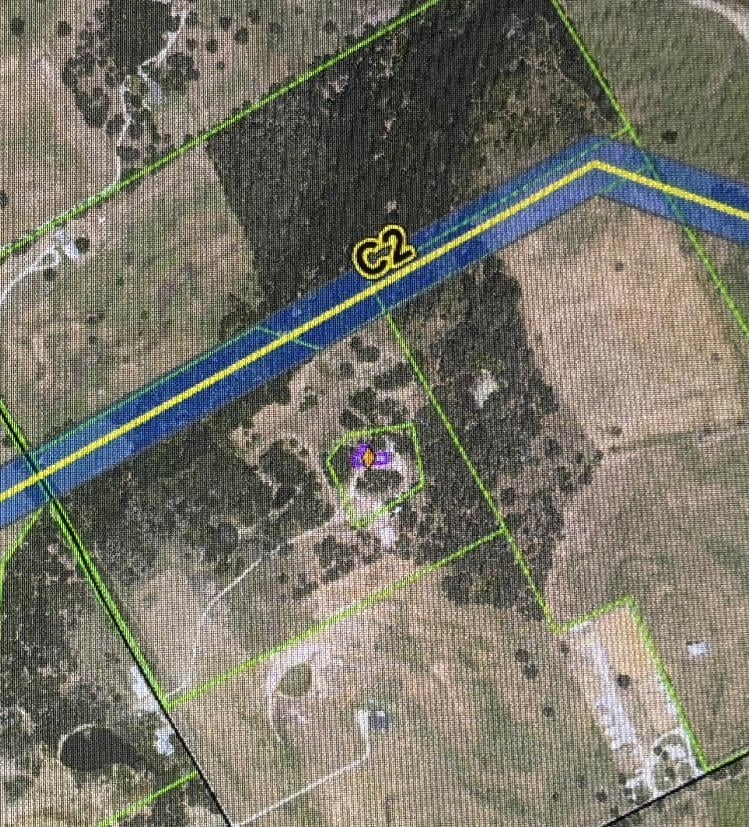
What Is East Texas Land Worth Right Now?
Let’s start with the numbers, because they paint a clear picture.
According to the Texas Real Estate Research Center at Texas A&M University (TRERC), the statewide median price per acre for rural land reached $4,827 in early 2025 — a 2.68% increase year over year. But Northeast Texas, which includes Hopkins, Wood, Titus, Rains, Upshur, Camp, Morris, and 16 other counties, consistently trades above the statewide average.
Texas Farm Credit’s 2026 Land Pricing Guide reports that Northeast Texas land averaged $9,303 per acre in 2025 — nearly double the statewide figure. And current listings tracked by Land.com for the Northeast Texas region show a median asking price per acre of $10,038, with average tract sizes around 94 acres.
For a specific look at one of our core counties: in Hopkins County alone, Land.com data shows a median price per acre of $13,908 for listed properties — with Hopkins County recording the most land sales activity of any county in the Northeast Texas region in recent months.
Why Does East Texas Land Command Premium Prices Compared to Other Regions?
There are five major reasons East Texas land consistently commands premium pricing over most of the state:
1. Timber and timber income. East Texas’s 43-county Piney Woods belt produces nearly all of Texas’s commercial timber. According to Texas Farm Bureau, Texas sawmills produced over 1.5 billion board feet of lumber in 2022, and timber remains one of the state’s top agricultural commodities by value. Land with mature pine or hardwood timber carries built-in income potential that drives prices higher.
2. Water. East Texas receives more rainfall than anywhere else in the state. Many tracts feature spring-fed creeks, tanks, ponds, or frontage on major lakes — including Lake Fork (Wood County), Lake Bob Sandlin (Titus/Franklin Counties), Cooper Lake (Hopkins County), and Lake Tawakoni (Rains/Hunt Counties). Water access nearly doubles land value in most Texas markets.
3. Hunting and recreation demand. The Piney Woods and Post Oak Savannah regions attract hunters from Dallas-Fort Worth, Houston, and Shreveport who are willing to pay premium prices for deer, hog, turkey, and duck hunting ground. This recreational demand is a significant price driver that other parts of Texas don’t have at the same level.
4. DFW proximity. Hopkins County is roughly 90 minutes from Dallas. Wood County is under two hours. As the DFW metroplex grows — and it is growing by hundreds of thousands of people per decade — the “day trip distance” from the city becomes increasingly valuable for weekend retreats, small farms, and recreational properties.
5. Ag and timber exemptions. Texas law allows agricultural and timberland to be taxed on productivity value rather than market value, dramatically reducing the carrying cost of land ownership. We cover this in detail below.
County-by-County Breakdown: What Land Is Worth in PREAM’s Service Area
Here’s a current look at land market conditions in the counties we purchase in most frequently:
Hopkins County
Median price per acre: ~$13,908 (listed properties) Character: Rolling hills, mixed pasture and hardwood timber, Cooper Lake, strong ag heritage (formerly called the “Dairy Capital of Texas”). Well-connected by I-30 and US-67. Who’s buying: DFW buyers seeking weekend retreats and small ranches, farmers expanding operations, investors. Notable: Hopkins County had more recorded land sales than any other county in the Northeast Texas region recently, according to Land Network data.
Wood County
Median price per acre: Premium for lakefront and timber parcels Character: Home to Lake Fork — widely regarded as the best bass fishing lake in Texas — as well as the city of Mineola (a historic railroad town with a growing arts community). Heavy timber cover. Who’s buying: Recreational buyers and lake investors from the DFW area dominate this market. Working ranchers also active. Notable: Lake Fork frontage carries significant premiums. Interior timber tracts move more slowly but hold their value.
Titus County
Character: East Texas pine belt, Lake Bob Sandlin to the north, Mount Pleasant as the county seat. Good timber ground with a mix of agriculture. Who’s buying: A blend of recreational and agricultural buyers. Proximity to Texarkana and the Arkansas border brings buyers from multiple states.
Rains County
Character: One of Texas’s smallest counties by area, but packed with value. Lake Tawakoni sits on the western edge, making waterfront property highly competitive. Dense hardwood and mixed timber throughout. Who’s buying: DFW metro buyers dominate — Rains County is close enough to be a true weekend destination. Lake properties move fast.
Smith County
Median price per acre: $22,344 (listed properties); $13,030 (recorded sales per Acres.com) Character: Smith County is anchored by Tyler, the largest city in East Texas and widely called the Rose Capital of the World. At 949 square miles, the county offers a striking split between its heavily forested eastern portion — ideal for timber and recreation — and the fertile central and southern farmland closer to Tyler. Major water bodies include Lake Tyler and Lake Palestine. The county has over 1,180 miles of county roads plus Interstate 20 and US Highway 69, giving it some of the best rural infrastructure in the region. Who’s buying: Smith County attracts a wider range of buyers than most East Texas counties because of Tyler’s size and amenities. DFW and Houston buyers seeking weekend retreats within easy driving distance, developers eyeing land near Tyler’s growing Loop 323 corridor, agricultural operators, and timber investors are all active here. Notable: Smith County ranks fifth in all of Texas for total acres of land currently listed for sale, with roughly 100,000 acres on the market representing close to $844 million in listed value. The Tyler metro’s continued growth — driven by healthcare, education, and retail — keeps upward pressure on land near city limits while rural acreage further out remains more accessible for agricultural buyers. PREAM Lands‘s focus in Smith County: We are most active in rural and semi-rural parcels outside the immediate Tyler city limits — pasture, timber, and transitional acreage where the direct cash sale model creates the most value for sellers.
Camp, Morris, and Upshur Counties
Character: Deep East Texas feel — heavy pine timber, rolling terrain, lower population density, strong hunting traditions. Generally lower per-acre prices than the western counties in our service area, but excellent value for buyers seeking privacy and recreational use. Who’s buying: Hunting lease investors, timber companies, individuals seeking affordable rural retreats.
The Big Picture: What Is Happening in the East Texas Land Market Right Now?
Prices Remain Strong — But Volume Has Pulled Back
Here’s the key tension in the current East Texas market: prices remain near historic highs, but the number of transactions has declined significantly.
According to TRERC’s third-quarter 2025 data reported by Land.com, Northeast Texas saw sales volume fall 25.6% from a year ago, with only 731 transactions recorded. Total dollar volume dropped 8.8%. Yet despite the slowdown in activity, prices still rose 4.3% to $9,303 per acre.
What does this mean for landowners? It means the market isn’t crashing — it’s tightening. Fewer properties are changing hands, but the ones that do are still selling at historically high values. The buyers who remain active are serious, well-capitalized, and selective. Motivated sellers — especially those dealing with inherited land, tax burdens, or estate situations — have a real opportunity to convert that land into cash at today’s strong prices before market conditions shift further.
Why Are Fewer Properties Selling?
Several factors have combined to slow transaction volume in East Texas:
Interest rates. Higher borrowing costs have sidelined many retail buyers who need financing. This particularly impacts the recreational buyer segment, which relies heavily on land loans. However, cash buyers — like PREAM Lands — are entirely unaffected by interest rate conditions.
Seller expectations vs. buyer reality. After several years of rapid appreciation, some sellers are holding out for peak-2021 prices that the current market won’t consistently support. Properties priced aggressively often sit on MLS for months or years.
Smaller tract sizes. According to TRERC, the average tract size sold statewide decreased 7.3% in 2025. This reflects a market where large-acreage buyers are harder to find and sellers are subdividing to attract a wider buyer pool.
Uncertainty. General economic uncertainty has pushed some would-be buyers to “wait and see.” TRERC’s own forecast models projected modest price softening through 2025, though actual prices have continued to rise — suggesting the market has more resilience than some anticipated.
What Does the Future Hold?
The TRERC 2025 forecast projected that total acres sold in Texas would begin rising again in the second half of 2026. In other words, the quiet period may be ending — and when volume picks back up, it typically does so with increased competition for available properties.
For landowners who have been on the fence, that trajectory matters. Selling during the quiet period means less competition from other listings. Waiting until buyers flood back into the market means your property is one of many options rather than one of few.
The Ag Exemption Factor: Why It Changes Everything for Sellers
One topic that consistently comes up when we talk to East Texas landowners is the agricultural exemption — also called the ag exemption or ag valuation.
Under the Texas Constitution and Tax Code, land actively used for agriculture, timber production, or qualified wildlife management is taxed based on its productivity value (what the land can produce) rather than its market value (what it would sell for). On land that has appreciated significantly in East Texas, this difference can be enormous.
As one Texas attorney noted, on a 100-acre property with a $1.5 million market value, annual ag exemption savings can commonly range from $20,000 to $35,000 per year. For landowners who have held their land for decades, the ag exemption may have saved hundreds of thousands of dollars in taxes over time.
For sellers, the ag exemption raises two important considerations:
1. Rollback Taxes Can Surprise You
If land loses its agricultural qualification — either because it’s sold for development, or because you stopped active ag use — Texas law requires you to pay five years of rollback taxes, which is the difference between what you paid under ag valuation and what you would have paid at market value, plus 7% annual interest. On high-value East Texas land, rollback taxes can run into six figures.
However, rollback taxes do not apply when land is sold to another party that continues agricultural use. When PREAM Lands purchases a property, we evaluate whether the existing ag exemption can be preserved or converted to wildlife management use under Texas Tax Code §23.521 — which in many cases allows us to offer a stronger net price to the seller.
2. Wildlife Management Conversion Is a Powerful Option
Texas law allows land that already qualifies for ag valuation to convert to wildlife management use under Texas Parks and Wildlife guidelines, maintaining the same favorable tax treatment. The landowner simply implements a wildlife management plan covering at least three of seven approved practices (habitat control, supplemental food, water, predator control, etc.) and files it with the county appraisal district by April 30 each year.
This is particularly valuable for East Texas landowners who have older land or inherited property where active farming or ranching has lapsed. If the land still qualifies for ag appraisal, a wildlife management conversion can preserve the tax benefit without requiring a full cattle or timber operation.
What Types of East Texas Land Are Selling Right Now?
Not all land in East Texas moves at the same speed or the same price. Here’s a realistic breakdown of what buyers are actively seeking:
Moving quickly:
- Recreational tracts (50 to 200 acres) with timber, ponds, and privacy — especially within 90 minutes of DFW
- Lake-adjacent and lake-view properties in Wood, Rains, Titus, and Hopkins Counties
- Hunting properties with established deer populations and food plots
- Land in the $200,000 to $600,000 range (accessible to retail buyers with financing)
Moving more slowly:
- Very large tracts (500+ acres) — the buyer pool is smaller and financing is complex
- Properties with title complications (heirship issues, back taxes, unclear boundaries)
- Landlocked parcels with no road access or easement
- Properties priced above $15,000 per acre without waterfront or exceptional improvements
Where PREAM Lands purchases best: We specialize in properties that are harder to sell on MLS — inherited land, tax-delinquent parcels, landlocked tracts, older surveys, and land tied up in estates or family situations. These are the properties where the traditional listing process creates friction, delay, and uncertainty, and where a fast cash close creates genuine value for the seller.
The Real Cost of Holding Land You Don’t Use in East Texas
This is a conversation we have regularly. Landowners sometimes treat inherited or unused land as a “free” asset — something sitting in the background that costs nothing. The math tells a different story.
Even a modest 50-acre East Texas tract currently valued at $500,000 generates real costs every year:
Property taxes (even with ag exemption): $800 to $2,500/year depending on county and exemption status. Without an exemption, that same land could generate $8,000 to $15,000/year in property taxes.
Maintenance: Fence upkeep, road maintenance, brush control, and basic liability management — $1,000 to $3,000/year on an unimproved pasture or timber tract.
Insurance: A basic liability policy on rural land runs $500 to $1,500/year.
Opportunity cost: If that $500,000 were invested conservatively at 5%, it would generate $25,000 per year. Every year the land sits unsold is a year that cash isn’t working for you.
For out-of-state heirs — which describes a large percentage of the sellers we work with in East Texas — these costs are compounding on property you may never visit and cannot easily manage from a distance.
How PREAM Lands Buys East Texas Land — And Why It’s Different
PREAM Lands isn’t a typical “we buy land” operation. Owner Justin Treaster is a licensed Texas real estate agent (TREC licensed), which means every transaction we enter is governed by the NAR Code of Ethics and Texas TREC standards. You get the speed and simplicity of a cash buyer with the professional protection and accountability of a licensed agent.
Here’s what working with PREAM Lands looks like:
Step 1: Contact us. Call (214) 542-3241 or submit your property information at webuylandntx.com. We serve all of North and East Texas — Hopkins, Wood, Titus, Rains, Upshur, Smith, Camp, Morris, Franklin, and surrounding counties.
Step 2: We research your property. Using our MLS access, county appraisal records, and local market knowledge, we evaluate your land within 24 to 48 hours. No onsite visit required at this stage.
Step 3: We present a written cash offer. Our offer comes with a clear explanation of how we arrived at it. No lowball tactics, no pressure, no obligation. As a licensed company, we’re required to deal honestly and transparently in every transaction.
Step 4: You choose your closing timeline. We can close in as little as 14 days — or we can work around your schedule. Closing is handled by a licensed Texas title company.
Step 5: You get paid. No fees, no commissions, no deductions. The offer we make is what you receive at closing.
Frequently Asked Questions About the East Texas Land Market
What’s the average price per acre for land in East Texas right now? Based on data from the Texas Real Estate Research Center at Texas A&M and market listing data, Northeast Texas land (which covers most of what is commonly called East Texas) averages between $9,000 and $10,000 per acre in 2025, with significant variation based on county, water features, timber, and road access. Hopkins County listings are currently showing a median near $13,900 per acre.
Is now a good time to sell land in East Texas? Prices are near historic highs, and while sales volume has slowed, the buyers who are active are serious and well-capitalized. For landowners with challenging situations (inherited land, back taxes, estate complications), selling now avoids the cost and uncertainty of waiting for the retail market to heat back up.
What types of land does PREAM Lands purchase in East Texas? We buy vacant land, pasture, timber tracts, agricultural land, hunting land, and transitional acreage of all sizes. We also buy land with back taxes, heirship complications, and other title issues that make traditional listing difficult.
Does having an ag exemption affect my land’s sale price? The ag exemption reduces your tax burden but doesn’t limit what you can sell your land for — it sells at full market value. The main issue is rollback taxes, which can apply if the new owner discontinues agricultural use. We discuss this in every transaction and structure deals to minimize rollback exposure wherever possible.
What counties does PREAM Lands serve? Our primary service area is Hopkins, Wood, Titus, Rains, Upshur, Smith, Camp, Morris, Franklin, Delta, and Hunt Counties. We also review parcels in adjacent counties — call or contact us and we’ll let you know quickly if your county is in our current buying area.
How is selling directly to PREAM Lands different from listing on MLS? Listing on MLS means months of showings, financing contingencies, inspection demands, and an agent commission of 5 to 6%. We buy directly, pay cash, cover closing costs, and close on your schedule — in as little as 14 days. For many East Texas landowners, the speed and certainty of a direct sale is worth more than the theoretical upside of a listed price that may take 12 to 18 months to achieve.
Sources and Further Reading
The data in this post comes from the following authoritative, non-commercial sources:
- Texas Real Estate Research Center at Texas A&M University (TRERC) — the gold standard for Texas rural land market data
- Texas Farm Credit 2026 Land Pricing Guide — comprehensive regional pricing data
- Texas Farm Bureau — Agricultural Land Values Report — USDA land value summary for Texas
- Texas Comptroller of Public Accounts — Ag and Timber Exemptions — official exemption rules and forms
- Texas Parks and Wildlife Department — Wildlife Management Tax Appraisal — wildlife management conversion guidelines
- USDA NASS — Northeast Texas Agricultural District — official county classifications for Northeast Texas
Ready to Find Out What Your East Texas Land Is Worth?
PREAM Lands is a licensed Texas real estate company purchasing land across North and East Texas. We’ll evaluate your property, present a fair cash offer, and close on your timeline — no fees, no commissions, no runaround.
Get your free, no-obligation cash offer →
Or call us directly: (214) 542-3241

We buy in Hopkins County, Wood County, Titus County, Rains County, Upshur County, Smith County, Camp County, Morris County, Franklin County, Delta County, Hunt County, and surrounding areas of North and East Texas.
PREAM Lands | Dallas, TX | (214) 542-3241 | webuylandntx.com
Justin Treaster is a licensed Texas Real Estate Agent. PREAM Lands is a licensed Texas real estate company. Market data cited in this article is sourced from third parties and reflects conditions as of publication. Individual property values vary — contact us for a specific evaluation of your land.